

Free Zoom Event on Japan's 9 Million Akiya with Terrie Lloyd
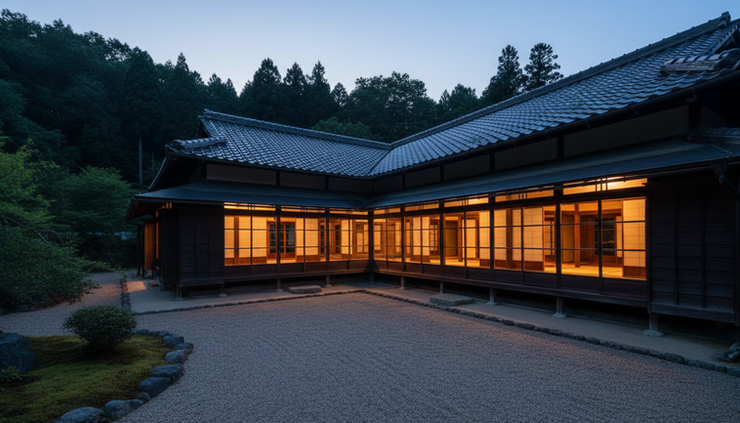
Japan has an estimated 9 million akiya, vacant homes often found in rural towns and villages where the population has thinned, aged, or moved away. Some are modest postwar houses. Some are traditional homes with timber beams, tiled roofs, garden walls, and the quiet dignity that comes from generations of use.
Next Thursday, September 3 at 5:00 PM Pacific, I’ll be moderating a free Zoom event through the Japan America Society of San Diego that can answer your questions about this unique situation and the opportunities it also brings.
Our speaker is Terrie Lloyd, a longtime entrepreneur in Japan whose current venture, Akiya 2.0 KK, is working to restore these homes and connect them to travelers before the culture inside them disappears.
I’ve known Terrie for more than 25 years. He is one of those rare people who can make you rethink what entrepreneurship can mean, not just as a way to build companies, but as a way to respond to a cultural problem at scale, and make a truly positive impact.

Why Japan’s akiya matter
The word `akiya` simply means vacant house. On paper, that sounds like a real estate issue. In practice, it touches much more.
A vacant home can represent a family that moved to a city, an aging owner who passed away, an inheritance that no one knows how to manage, or a rural community that has lost schools, shops, bus routes, and young families over time. When one house sits empty, it may just be a private problem. When many houses sit empty, the effect spreads.
That's why this topic is bigger than property. Akiya raise questions about what gets preserved, who gets to preserve it, and whether rural culture can find new life without being turned into a museum piece.
Japan is not the only country facing rural decline, aging populations, or property abandonment. But Japan’s scale, visual heritage, and global appeal make the akiya issue especially compelling. These homes sit at the crossroads of preservation, tourism, demographic change, and entrepreneurship.
This free Zoom event is for anyone curious about Japan, old houses, rural travel, preservation, or the practical question of what can be done when a society has millions of vacant homes and no easy answer.
Terrie Lloyd brings an unusual point of view
Terrie Lloyd has spent 44 years in Japan building companies. Over that time, he has founded 18 companies and exited 8. Those numbers alone would make him worth listening to, but they are not the main reason we invited him for this event.
The more interesting reason is that Terrie has chosen to apply his business experience to a problem that does not fit neatly into one category.
Akiya are not just a construction issue. They are not just a tourism issue. They are not just a government policy issue. They are not just an investment issue. Any serious response has to deal with property rights, restoration costs, local communities, travelers, regulations, culture, and trust.
That is where an entrepreneurial mind can be useful.
Terrie’s current venture, Akiya 2.0 KK, is restoring vacant homes and connecting them to travelers. The idea is not simply to clean up old houses and put them online. The larger question is whether these homes can become part of a living system again.
Can a vacant traditional home welcome guests in a way that respects the community around it?
Can preservation pay for itself without stripping away the character that made the house worth saving?
Can visitors experience rural Japan in a way that supports the place rather than consuming it?
These are the kinds of questions we'll be exploring...with you, if you join us.

This is a conversation about entrepreneurship with cultural stakes
When people hear the word entrepreneurship, they often think of apps, fundraising, pitch decks, or fast growth. Terrie’s work points to a different version of the word.
Entrepreneurship can also mean seeing a neglected problem clearly, bringing together people who do not usually work together, and building a model that can survive beyond good intentions.
In the case of akiya, the stakes are practical and cultural at the same time.
A restored home needs a roof that does not leak, plumbing that works, and safe access for guests. It also needs sensitivity. Many rural communities do not want to become staged versions of themselves. A house that once belonged to a local family is not just an asset. It sits within a neighborhood, a set of memories, and a rhythm of life.
That tension is part of what makes this all so fascinating.
If a vacant home is left alone, it may collapse. If it is restored carelessly, it may lose what made it special. If it is restored thoughtfully, it can become a place where visitors encounter regional Japan in a more direct and human way.
That is a difficult path. It takes capital, local relationships, patience, and a willingness to learn from the people who live closest to the problem.
This is one reason I’m looking forward to moderating the discussion. Terrie has built companies, but he also understands Japan from decades of living and working there. He is not approaching this as a passing trend. He is looking at it through experience, scale, and respect for what may be lost.
What we’ll cover during the event
The event will run about an hour, so the goal is to keep the conversation focused, useful, and accessible.
We’ll explore several areas:
What akiya are and why Japan has so many of them
How rural depopulation changes the future of traditional homes
What makes restoring these properties difficult
How Akiya 2.0 KK is approaching the challenge
Why travelers may play a role in keeping these homes alive
What this work says about entrepreneurship in Japan
What other countries might learn from Japan’s experience
The discussion should be useful even if you know very little about Japanese real estate. You do not need to be an investor, architect, preservationist, or Japan specialist to follow along.
If you have visited Japan and wondered what lies beyond the major cities, this will connect with you. If you care about cultural preservation, this will connect with you. If you are interested in how experienced entrepreneurs choose their next problem, this will connect with you too.
Akiya sound romantic from a distance. A beautiful rural home in Japan can stir the imagination quickly. But the reality includes legal complexity, repair costs, aging infrastructure, local concerns, and the careful work of making something livable again.
That balance between romance and reality is exactly what we need to talk about.

Why the timing feels urgent
Traditional homes do not wait politely for someone to save them. Once weather, moisture, and neglect take hold, the cost of restoration rises. In some cases, a property becomes too damaged to recover.
There is also a cultural timeline. The people who remember how these houses were used, maintained, and understood are aging. Local craftspeople with the skills to repair traditional materials may be harder to find. Younger generations may feel less connected to specific villages, especially if they grew up elsewhere.
That does not mean every old house can or should be saved. Preservation without a realistic plan becomes wishful thinking. But when a home has cultural value, structural promise, and local support, speed matters.
The akiya issue also pushes against a common assumption about Japan. Many visitors know Tokyo, Kyoto, Osaka, and a few famous destinations. Those places are extraordinary, but they are not the whole country. Rural Japan contains layers of history, craft, food, architecture, and seasonal life that most short trips never touch.
If restored homes can help travelers experience those places more thoughtfully, they may also help support the communities that hold them.
That is not a simple fix. Tourism can create problems when it overwhelms local life. But smaller, place-based travel can also bring money, attention, and renewed interest to areas that have been overlooked.
The difference lies in how it is done.
Event details
Here are the key details for the session.
Detail | Information |
Event | Free Zoom event through the Japan America Society of San Diego |
Topic | Japan’s akiya and the future of vacant traditional homes |
Speaker | Terrie Lloyd of Akiya 2.0 KK |
Moderator | Andrew Silberman |
Pacific time | Thursday, September 3 at 5:00 PM PDT |
Japan time | Friday, September 4 at 9:00 AM JST |
Length | About one hour |
Cost | Free |
Location | Zoom |
The event is open to anyone with an interest in Japan, preservation, rural culture, travel, or entrepreneurship.
If you know someone who would enjoy this conversation, please feel free to pass the invitation along.
Why I wanted to host this discussion
I’ve known Terrie for more than 25 years, and I’ve seen how he thinks about building things. He is practical, direct, and serious about Japan. He also has the kind of career that gives weight to his perspective. When someone has spent decades starting companies in Japan, then turns attention to saving vacant traditional homes, that choice is worth understanding.
I also think the akiya question opens a larger conversation about what we value.
Can old homes become useful again? Can visitors help sustain rural places without overwhelming them? Can business serve preservation without reducing culture to a product?
There are no easy answers, which is why the conversation should be interesting.
Join us on September 3
If this topic interests you, I’d be glad to have you join us.
The event is free, online, and about an hour long. It will take place on Thursday, September 3 at 5:00 PM Pacific, which is Friday, September 4 at 9:00 AM in Japan.
You can register here:
The future of Japan’s vacant traditional homes will not be solved in one hour. But a good conversation can help clarify what is at stake, what is possible, and why this issue deserves more attention.
Hope to see you there!


hii
Unbelievable Blog! I should need to thank for the undertakings you have made in creating this post. I am believing a comparable best work from you later on moreover. I expected to thank you for this destinations! Thankful for sharing. Amazing destinations!
Here is why securing a car rental Zakynthos makes all the difference.
HIii